As a supplier of slewing jib cranes, I often encounter inquiries from customers regarding the suitability of our products for use in hazardous areas. This is a crucial question that requires a comprehensive understanding of both the nature of hazardous environments and the capabilities of slewing jib cranes. In this blog post, I will delve into the factors that determine whether a slewing jib crane can be used in a hazardous area, the necessary precautions, and the specific types of jib cranes that may be more suitable for such conditions.
Understanding Hazardous Areas
Hazardous areas are defined as locations where there is a risk of explosion due to the presence of flammable gases, vapors, dusts, or fibers. These areas are classified based on the likelihood and duration of the presence of the explosive atmosphere. The most common classification systems are the International Electrotechnical Commission (IEC) and the North American National Electrical Code (NEC).
- Zone Classification: In the IEC system, hazardous areas are divided into zones. Zone 0 is an area where an explosive gas atmosphere is present continuously or for long periods. Zone 1 is an area where an explosive gas atmosphere is likely to occur in normal operation. Zone 2 is an area where an explosive gas atmosphere is not likely to occur in normal operation and, if it does occur, will exist only for a short time.
- Dust Zones: For dust - related hazardous areas, the IEC classifies them as Zone 20 (an area where an explosive dust atmosphere is present continuously or for long periods), Zone 21 (an area where an explosive dust atmosphere is likely to occur in normal operation), and Zone 22 (an area where an explosive dust atmosphere is not likely to occur in normal operation and, if it does occur, will exist only for a short time).
Can a Slewing Jib Crane be Used in a Hazardous Area?
The answer is yes, but with significant precautions and modifications. A standard slewing jib crane is not designed to be used in a hazardous area because it may generate sparks, heat, or static electricity, which can ignite the explosive atmosphere. However, with proper engineering and safety measures, a slewing jib crane can be made suitable for use in such environments.
- Explosion - Proof Design: The most critical aspect is to design the crane with explosion - proof features. This includes using explosion - proof motors, electrical components, and switches. Explosion - proof motors are designed to contain any internal explosion and prevent it from spreading to the surrounding atmosphere. Electrical components are enclosed in special housings that can withstand the pressure of an internal explosion without rupturing.
- Material Selection: The materials used in the construction of the crane also play a crucial role. Non - sparking materials should be used for parts that may come into contact with each other or with the surrounding environment. For example, brass or bronze can be used instead of steel in some applications to reduce the risk of sparking.
- Static Electricity Prevention: Static electricity can be a significant hazard in a hazardous area. To prevent static buildup, the crane should be properly grounded, and anti - static coatings or materials can be used on surfaces where static electricity is likely to accumulate.
Types of Slewing Jib Cranes for Hazardous Areas
There are different types of slewing jib cranes, and some may be more suitable for hazardous areas than others.
- Wall Travelling Jib Crane: Wall Travelling Jib Crane is a type of jib crane that runs along a wall - mounted track. This type of crane can be a good option for hazardous areas because it can be installed in a way that minimizes its exposure to the explosive atmosphere. The track can be designed to keep the crane away from areas where the explosive atmosphere is more likely to be present.
- Free Standing Jib Crane: Free Standing Jib Crane is a self - supported crane that can be installed on the floor without the need for wall or ceiling support. This type of crane can be easily located in a hazardous area, but it requires careful consideration of its position to ensure that it does not interfere with the normal operation of the area. It can also be equipped with explosion - proof features more easily due to its independent structure.
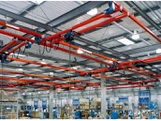
- BZ Column Cantilever Crane: BZ column cantilever crane is a type of jib crane that is supported by a column. It is a relatively simple and cost - effective option for light - duty lifting tasks. In a hazardous area, this type of crane can be designed with explosion - proof components and proper grounding to ensure safe operation.
Precautions and Maintenance
Even with an explosion - proof design, using a slewing jib crane in a hazardous area requires strict precautions and regular maintenance.


- Regular Inspections: The crane should be inspected regularly to ensure that all explosion - proof features are in good working condition. This includes checking the integrity of the explosion - proof housings, the functionality of the grounding system, and the performance of the motors and electrical components.
- Operator Training: Operators should be trained on the specific hazards associated with using the crane in a hazardous area. They should know how to operate the crane safely, how to recognize potential problems, and what to do in case of an emergency.
- Environmental Monitoring: Continuous monitoring of the hazardous area is essential. This includes monitoring the concentration of flammable gases or dusts, temperature, and humidity. If the environmental conditions exceed the safe limits, the crane should be shut down immediately.
Conclusion
In conclusion, a slewing jib crane can be used in a hazardous area, but it requires careful design, proper installation, and strict maintenance. As a supplier of slewing jib cranes, we have the expertise and experience to provide customized solutions for customers in hazardous areas. We can design and manufacture explosion - proof cranes that meet the specific requirements of different hazardous environments.
If you are looking for a slewing jib crane for your hazardous area, we encourage you to contact us for a detailed consultation. Our team of experts will work with you to understand your needs and provide the best possible solution. Whether you need a Wall Travelling Jib Crane, a Free Standing Jib Crane, or a BZ column cantilever crane, we have the capabilities to deliver a high - quality, safe, and reliable product.
References
- International Electrotechnical Commission (IEC) standards on hazardous areas.
- North American National Electrical Code (NEC) related to explosion - proof equipment.
- Crane manufacturer's guidelines on explosion - proof crane design and maintenance.