

What is the dynamic balance of a Crane Wheel Set?
As a supplier of Crane Wheel Sets, I've often been asked about the concept of dynamic balance in these crucial components. Understanding the dynamic balance of a Crane Wheel Set is essential for ensuring the smooth, safe, and efficient operation of cranes in various industrial settings.
The Basics of Dynamic Balance
Dynamic balance refers to the state in which the rotating parts of a machine, in this case, the crane wheel set, are balanced in such a way that there are no unbalanced forces or moments acting on the system during rotation. When a wheel set is dynamically balanced, it rotates smoothly without causing excessive vibrations, noise, or premature wear and tear on the crane's components.
Imagine a simple wheel. If the mass is evenly distributed around its axis of rotation, it will spin without any wobbling or shaking. However, in real - world applications, it's common for there to be slight variations in the mass distribution due to manufacturing tolerances, material inhomogeneities, or wear over time. These imbalances can lead to significant problems in a crane wheel set.
Why Dynamic Balance Matters in Crane Wheel Sets
In a crane, the wheel set is responsible for supporting the load and facilitating the movement of the crane along the runway. Any imbalance in the wheel set can have far - reaching consequences.
Safety: Unbalanced wheel sets can cause excessive vibrations, which may lead to the loosening of bolts, nuts, and other critical components. Over time, this can compromise the structural integrity of the crane, increasing the risk of accidents and failures. In extreme cases, an unbalanced wheel set could cause the crane to derail, posing a serious threat to the safety of workers and the surrounding environment.
Efficiency: Vibrations caused by unbalanced wheel sets require additional energy to overcome. This means that the crane's motors and other power - consuming components have to work harder, resulting in increased energy consumption and higher operating costs. Moreover, the uneven wear on the wheels and other parts due to imbalance can reduce the lifespan of the crane wheel set, leading to more frequent replacements and maintenance.
Performance: A dynamically balanced wheel set ensures smooth and stable movement of the crane. This is crucial for accurate positioning of loads, especially in applications where precision is required, such as in manufacturing plants or warehouses. Unbalanced wheel sets can cause the crane to move erratically, making it difficult to control and reducing the overall productivity of the operation.
Achieving Dynamic Balance in Crane Wheel Sets
The process of achieving dynamic balance in a crane wheel set involves several steps.
Inspection and Measurement: The first step is to thoroughly inspect the wheel set for any visible signs of damage, wear, or irregularities. This may include checking for cracks, flat spots, or uneven tread wear. After the visual inspection, specialized equipment is used to measure the amount and location of the imbalance. This typically involves using a balancing machine that can detect the unbalanced forces and moments acting on the rotating wheel set.
Correction: Once the imbalance has been measured, the next step is to correct it. This can be done in several ways. One common method is to add or remove weight from specific locations on the wheel set. For example, small weights can be attached to the wheel at the appropriate position to counteract the unbalanced forces. In some cases, material may need to be removed from the wheel through machining or grinding to achieve the desired balance.
Verification: After the correction process, the wheel set is re - measured to ensure that the dynamic balance has been achieved. This verification step is crucial to ensure that the wheel set meets the required standards and specifications.
Related Crane Spare Parts and Their Role in Maintaining Balance
In addition to the crane wheel set itself, several other spare parts play a crucial role in maintaining the overall balance and performance of the crane.
Crane Variable - frequency Drive: A Crane Variable - frequency Drive is an important component that controls the speed and torque of the crane's motors. By adjusting the frequency of the electrical power supplied to the motors, the variable - frequency drive can ensure smooth and precise movement of the crane. This is especially important when starting, stopping, or changing the direction of the crane, as it helps to minimize the stress on the wheel set and other components, reducing the risk of imbalance.
YWZ4 Series Hydraulic Drum Brake: The YWZ4 Series Hydraulic Drum Brake is a key safety component in a crane. It is used to stop and hold the crane in position when needed. A properly functioning brake is essential for maintaining the stability of the crane, especially when the wheel set is in motion. If the brake is not working correctly, it can cause the crane to move unexpectedly, leading to imbalance and potential safety hazards.
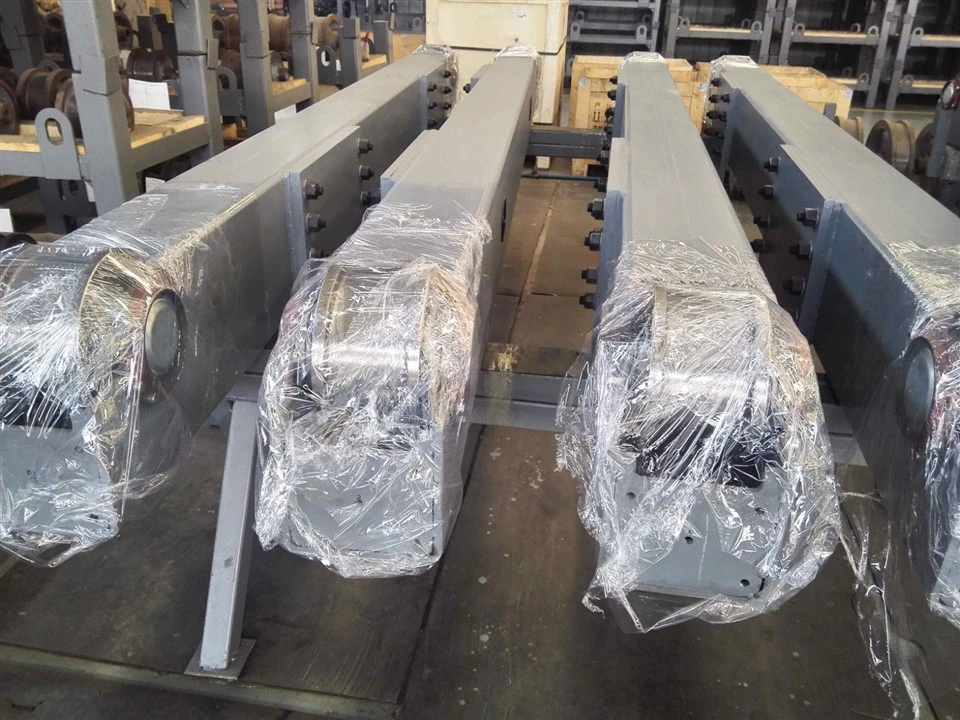
Crane End Beam/double Beam Crane End Beam: The Crane End Beam/double Beam Crane End Beam provides support for the crane and helps to distribute the load evenly across the wheel set. A well - designed and properly installed end beam is crucial for ensuring that the wheel set operates under optimal conditions. Any damage or misalignment of the end beam can affect the balance of the wheel set and the overall performance of the crane.

Conclusion and Call to Action
In conclusion, the dynamic balance of a crane wheel set is a critical factor that directly impacts the safety, efficiency, and performance of a crane. As a supplier of Crane Wheel Sets, we understand the importance of providing high - quality, dynamically balanced products to our customers. Our team of experts is dedicated to ensuring that each wheel set we supply meets the strictest standards of quality and balance.
If you are in the market for a reliable Crane Wheel Set or any other crane spare parts, we invite you to contact us for a detailed discussion. Our experienced sales team can provide you with all the information you need, including product specifications, pricing, and delivery options. We are committed to helping you find the best solutions for your crane operations and ensuring the long - term success of your business.
References
- "Crane Design and Operation Manual", Industrial Crane Association.
- "Fundamentals of Rotating Machinery Dynamics", John D. Gunter.
- Technical documents from leading crane manufacturers.


