

Bridge cranes are widely used lifting equipment in the industrial field, mainly used for lifting, transporting and loading and unloading materials. In the working process of bridge cranes, the hook is a very important part of the crane. According to its function and use in lifting operations, the hook of a bridge crane can be divided into a main hook and an auxiliary hook. Although both are used to lift heavy objects, there are some significant differences in their structure, usage, and applicable scenarios. This article will discuss the differences between the main hook and the auxiliary hook.
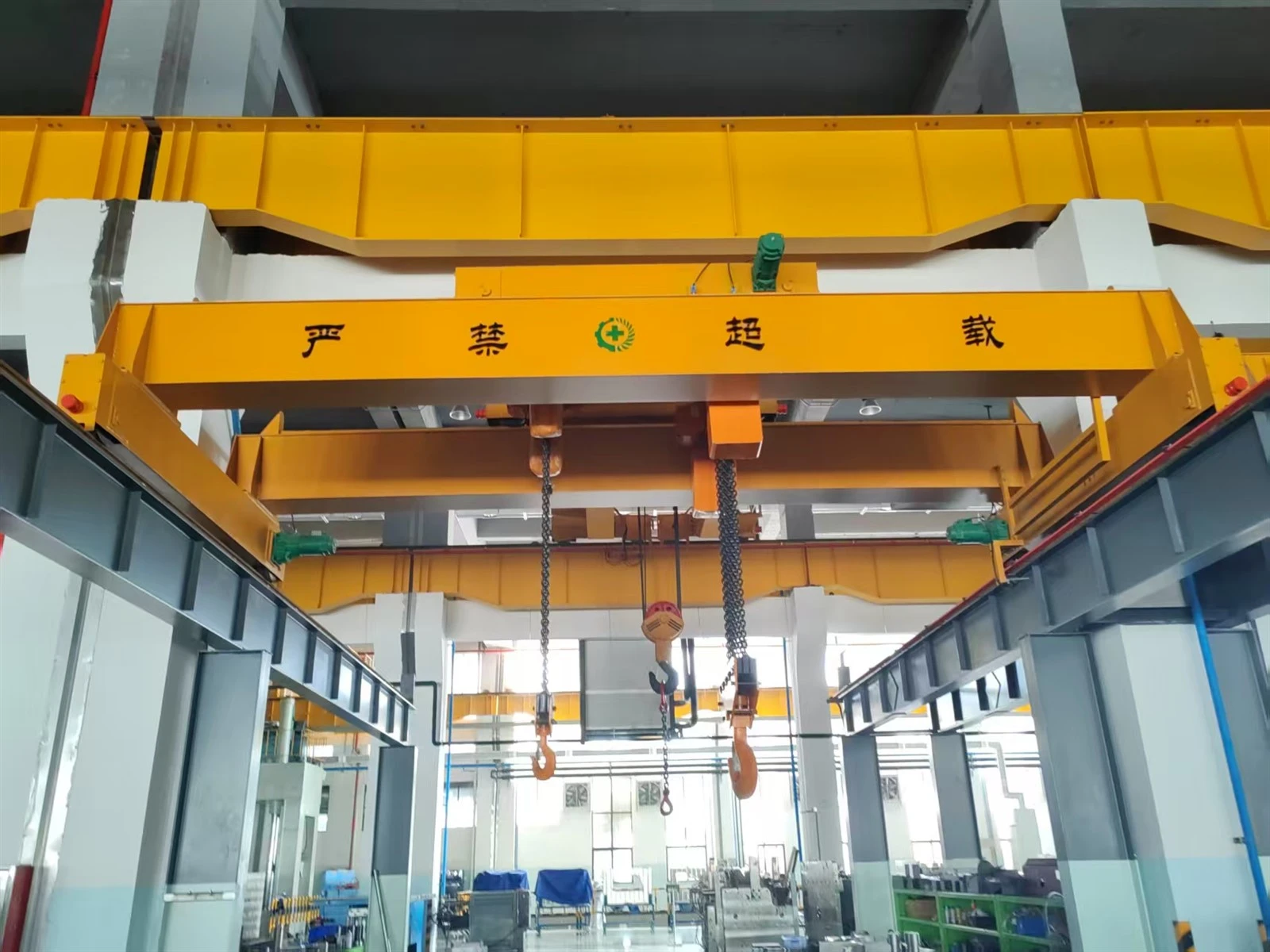
1.Basic Functions
- Main hook: The main hook of a bridge crane is the most important lifting tool of the crane, mainly used to lift heavy objects and large tonnage loads. Usually, the main hook is connected to the main lifting mechanism and takes on the heavy task of lifting and lowering. The main hook can be precisely positioned and is suitable for most daily lifting tasks.
- Auxiliary hook: The auxiliary hook is an auxiliary means of the bridge crane, usually connected to the auxiliary lifting mechanism. The auxiliary hook is mainly used to improve the flexibility of the operation, especially when multiple lifting, adjusting the lifting position or improving the operating efficiency are required. The auxiliary hook has a lower load capacity than the main hook and is usually suitable for lighter materials or used in conjunction with the main hook.
2. Load capacity
Main hook: The main hook is usually able to carry a larger load than the auxiliary hook. Depending on the crane specifications and application, the main hook can range from a few tons to hundreds of tons. It is the main load-bearing tool of the crane and is specially designed to handle high-load operations.
Auxiliary hook: The auxiliary hook has a lower load capacity than the main hook and is usually used for lifting lighter materials and equipment. The auxiliary hook is designed to focus on flexibility and versatility so that it can cooperate with the main hook to complete a variety of tasks. The auxiliary hook is suitable for small lifting operations with small loads or precise positioning.
3. Working method and usage scenarios
Main hook: As the main hook of the crane, the main hook is usually used for lifting and handling operations in most cases. It is suitable for various lifting tasks, especially for industrial environments that require large tonnage lifting, such as steel mills, heavy machinery manufacturers, shipbuilding plants, etc.
Auxiliary hook: The working method of the auxiliary hook is more flexible and varied. The auxiliary hook is often used for double hook operations, such as lifting multiple objects at the same time during the lifting process, or using the auxiliary hook to accurately adjust the positioning of the object. In addition, the auxiliary hook can also work with the main hook in a variety of lifting tasks to help reduce the tilt and shake of the object during the lifting process.
4.Installation and Operation
Main hook: The main hook is usually a stronger and more stable part of the crane, and its installation and maintenance require special attention to strength and safety. During operation, the lifting speed, accuracy and stability of the main hook are key to ensure safe operation.
Auxiliary hook: The installation method of the auxiliary hook is more flexible, and it can usually be installed and removed according to the needs of the operation. The operation of the auxiliary hook is relatively simple, but it requires precise coordination by the operator to ensure the balance and safety when the main hook and the auxiliary hook are used together.
5. Security and stability
Main hook: The safety and stability of the main hook are crucial, especially when lifting heavy objects. To ensure the safety of the main hook, the main hook is equipped with overload protection, limit switches and other devices to prevent accidents due to overload or other reasons.
Auxiliary hook: The safety of the auxiliary hook is equally important, especially when working with the main hook. The auxiliary hook generally has similar safety protection measures as the main hook, but because it has a lighter load, it is relatively less risky to carry.
The main hook and auxiliary hook serve different roles in a bridge crane. The main hook handles heavy-duty lifting, while the auxiliary hook offers flexibility for lighter or precise operations. Knowing their functions helps improve crane efficiency and safety.
At CATET, we specialize in high-performance bridge cranes and lifting solutions.


