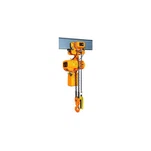
Overhead cranes are important pieces of equipment used by many industries to lift heavy objects. It is important to ensure that the crane can handle the weight of the load to prevent accidents and damage to the equipment. In this article, we will explore how to calculate the load capacity of an overhead crane.

What is the load capacity of an overhead crane?
The load capacity of an overhead crane refers to the maximum weight that the overhead crane can safely lift and transport. It is determined by several factors, including the crane's span, height under the hook, and duty cycle. The load capacity of an overhead crane is usually specified by the manufacturer and can range from a few hundred pounds to several tons.
The Importance of Understanding Overhead Crane Load Capacity
Knowing the load capacity of an overhead crane is essential to preventing accidents and injuries. Overloading a crane beyond its load capacity can cause the crane to tip over or collapse, endangering nearby workers and damaging the equipment. Additionally, exceeding load capacity can result in damaged materials, production delays, and potential legal liability.
In addition, knowing the load capacity of an EOT crane helps determine the right crane for a specific job. Selecting the wrong overhead crane can lead to inefficiencies, unnecessary expenses, and safety hazards. For example, using a crane with a low load capacity to load a heavy load can cause the crane to fail, resulting in downtime and lost revenue.
Calculation of the load-bearing capacity of bridge cranes
To calculate the load capacity of an overhead crane, you need to know four critical values:
1,Crane span: Crane span is the distance between the centers of the two trolleys supporting the bridge. It is measured from rail to rail.
2,Bridge weight (including trolley and hoist): The weight of an overhead crane includes the weight of the beam, trolley and hoist. You can find this information in the crane manufacturer's manual or by weighing the components.
3,Maximum wheel load: The maximum wheel load is the maximum weight that each wheel can support. This value can also be found in the crane manufacturer's manual.
4,Deflection: Deflection is the amount of bending that occurs in the crane structure when loaded. It is usually limited to 1/600 of the span.
Once you have these values, you can calculate the load capacity of your overhead crane using the following formula:
Load Capacity = (Maximum Wheel Load x Number of Wheels) + Bridge Weight / (Span / 800) – Deflection
Example Calculation
Assume your EOT crane has the following specifications:
Crane span: 25 feet
Bridge weight (including trolley and crane): 12,000 pounds
Maximum wheel load: 10,000 pounds
Deflection: 0.04 inches
Using the formula above, we can calculate its load capacity as follows:
Load Capacity = (10,000 lbs x 8 wheels) + 12,000 lbs / (25 ft / 800) – 0.04 in.
Load Capacity = 80,000 lbs + 12,000 lbs / (0.03125 ft) – 0.04 in.
Capacity = 2,560,000 lbs – 12,000 lbs / 0.03125 ft.
Load Capacity = 2,560,000 lbs – 384,000 lbs
Load Capacity = 2,176,000 lbs
So, the load capacity of this overhead crane is 2,176,000 lbs.
Factors affecting the load capacity of bridge cranes
Crane span
One of the most important factors affecting the load-carrying capacity of an overhead crane is its span. Span refers to the distance between the tracks that the crane travels on. Longer spans generally mean the crane can support heavier loads, while shorter spans have lower capacity limits. Ultimately, the maximum load capacity of an overhead crane is determined by the weakest component in the system.
Hook height
Another important factor that affects the load capacity of an overhead crane is the height under the hook. This refers to the distance between the bottom of the crane hoist and the floor below. As this distance increases, the load capacity of the crane decreases because the crane must use more energy to lift the load higher. Therefore, it is important to consider the height under the hook when selecting an EOT crane for a specific application.
Duty Cycle
The duty cycle of an overhead crane refers to the ratio of the time it is used to lift loads to the time it is idle. Cranes with higher duty cycles are designed for continuous lifting and moving, while cranes with lower duty cycles are intended for intermittent use. Selecting a crane with the proper duty cycle is critical to ensuring it can handle the demands of the job at hand without premature wear or failure.
Design and construction of cranes
The size and shape of a crane, as well as its mechanical components, determine its load capacity. Manufacturers specify the maximum weight limit that a crane can safely carry. Therefore, it is crucial to ensure that the design and construction of the crane complies with industry standards and regulations to avoid overloading or causing accidents during operation.
environment
The environment in which an overhead crane is used can also affect its load capacity. Factors such as temperature, humidity, and corrosive or abrasive materials can affect the performance of the crane and reduce its load capacity over time. Selecting a crane designed for a specific environment can help ensure that it maintains its load capacity and operates safely and efficiently for a long time.
Frequently asked questions
1,What happens if the crane is overloaded?
Overloading a crane can lead to structural damage, equipment failure, and even accidents or injuries. Therefore, it is important to ensure that the crane is not overloaded and is operated within its load capacity.
2,What are some tips for safe overhead crane load capacity?
Use the correct crane for the job, inspect the crane and its components regularly, avoid overloading, train operators in safe operation, and follow all safety guidelines and regulations.
3,What is the maximum weight that an overhead crane can lift?
The maximum weight that an overhead crane can lift depends on its type, design and environmental conditions. Overhead cranes have load capacities ranging from 1 tonne to over 100 tonnes.
4,How do I determine the lifting height of a load?
To determine the lift height of a load, measure the distance between the ground and where the load needs to be lifted.
5,How do I know if my crane is suitable for my application?
Consult a qualified engineer or crane expert to determine the right crane for your application based on factors such as load capacity, span, lift height and working class.