

Gantry cranes are an important type of lifting equipment, widely used in ports, freight yards and factory workshops to handle a large number of material handling tasks. To ensure their normal, efficient and safe operation. Daily maintenance and upkeep are extremely necessary. Good maintenance habits can extend the service life of equipment, prevent malfunctions, and ensure the safety of operators

1.Appearance Inspection
-
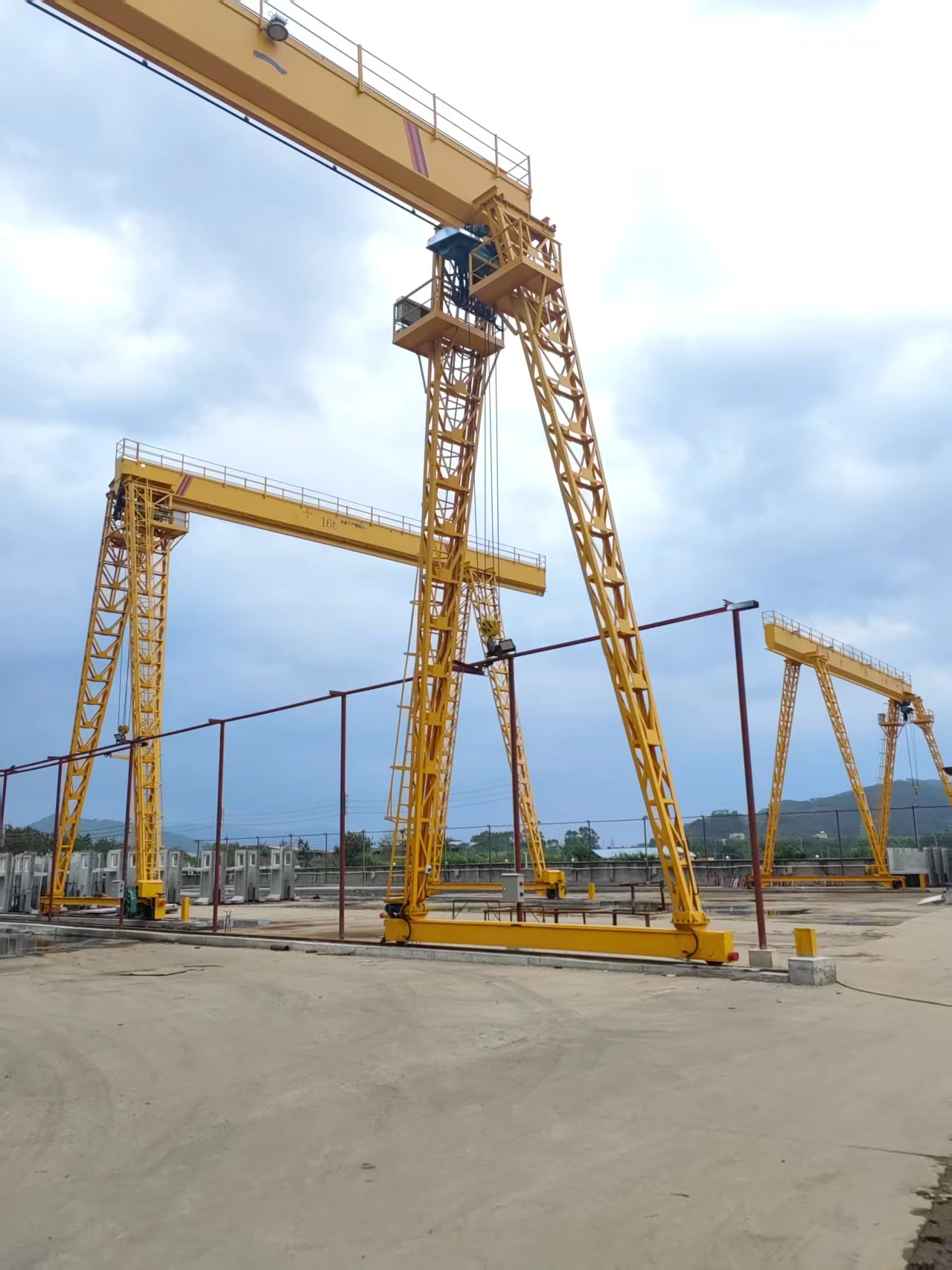
Structural Inspection
Inspect the appearance of the crane, including the main beam and outriggers, for any deformation, cracks or corrosion. For instance, the sagging of the main beam will seriously affect the normal operation and load-bearing capacity of the crane. If the subsidence exceeds the specified value, repair measures must be taken promptly. Even very small cracks can be early signs of structural damage and should be detected by professional means such as ultrasonic testing. Based on the test results, welding repairs or other operations should be carried out.
Check the connecting bolts and pins for looseness or absence. The loosening of these connecting parts can cause relative displacement between structural components, leading to equipment failure. For instance, if the bolts connecting the legs to the main beam become loose, the legs may shake during crane operation, affecting stability. Regularly use wrenches and other tools to tighten bolts and check for excessive wear on pins that may cause excessive clearance. If necessary, replace worn pins.
-
Guarding Inspection
Inspect the guarding devices such as railings, walkways, and ladders for sturdiness and completeness. The height and spacing of railings should meet safety standards to prevent operators and maintenance personnel from falling while working on the crane. For example, the height of the railing on the walkway should generally not be less than 1.05 meters, and the vertical spacing between railing bars should not exceed 0.3 meters. If any damage, deformation, or missing parts are found, they should be repaired or replaced immediately.
Check whether the safety signs and warning signs are clear and intact. These signs remind operators and people around to pay attention to the dangerous areas and operation precautions of the crane. For instance, near the hook of a crane, there should be a clear warning sign such as "Danger, Beware of suspended goods". For electrical equipment, there should be signs like "High Voltage Hazard". If the sign fades or is damaged, it should be replaced in time to ensure that it achieves the expected warning purpose.
2.Mechanical Component Maintenance
-
Wire Rope Maintenance
Check whether the steel wire rope is worn or has broken wires. The wear and breakage of steel wire ropes directly affect the safety of lifting operations. According to national standards, when the number of broken wires in a steel wire rope reaches a certain proportion, it must be replaced. If the laying direction of the steel wire rope is opposite to the winding direction, and the number of broken wires in one laying length reaches 10% of the total number of wires, it should be scrapped. When inspecting, carefully check the entire length of the steel wire rope, especially the parts passing through pulleys and rollers, as these areas are subjected to higher friction and bending stress, making them more prone to wear and breakage.
Lubricate the steel wire rope regularly. Lubrication can reduce the internal friction between the steel wires in the steel wire rope, slow down wear and prevent rusting. Generally, dedicated wire rope lubricants are used. When lubricating, apply the lubricant evenly to the surface of the steel wire rope and try to let the lubricant penetrate into the interior of the steel wire rope as much as possible. The lubrication cycle depends on the usage frequency and working environment of the crane. It is generally recommended to lubricate at least once a month. Under harsh working conditions, the lubrication cycle should be appropriately shortened.
-
Brake Maintenance
Check the braking performance of the brake. The brake is a key component for the safe operation of cranes. It can ensure that the crane stops quickly and accurately when needed. The braking distance and stability can be tested through no-load and light-load tests. For instance, under no-load conditions, the braking distance of the crane should comply with the relevant standard requirements. If the braking distance is too long, it may be due to excessive braking clearance or severe wear of the brake lining.
Check the brake components. Check the wear of the brake pads and the deformation or fatigue of the brake springs. The brake lining is a key component that comes into contact with the brake wheel. When it wears to a certain extent, the braking effect will decline significantly. Under normal circumstances, when the thickness of the brake pads wears down to about 50% of their original thickness, they should be replaced. At the same time, the elasticity of the brake spring is also very important for the normal operation of the brake. If the spring is fatigued, it will cause improper reset of the brake or insufficient braking force, and it needs to be replaced in time.
-
Wheel and Track Maintenance
Inspect the wear and rail-biting of the wheels. The wheels are the supporting components for the crane's movement on the tracks. Their wear affects the smooth operation of the crane and the lifespan of the tracks. Rail-biting refers to the abnormal friction between the crane wheels and the side of the track during movement. This can lead to accelerated wear of the wheel flanges and the side of the track. In severe cases, it can cause the crane to derail. When inspecting, pay attention to the wear of the wheel flanges and treads. If uneven wear or rail-biting is observed, the cause should be analyzed. It may be due to incorrect wheel installation, insufficient track installation accuracy, or skewing of the crane during operation. Then, take appropriate measures to adjust and repair.
Check the condition of the tracks. The straightness, joint clearance, and gauge of the tracks must meet specified requirements. Poor track straightness can cause the crane to move unevenly, affecting the stability of the lifted items. Excessive joint clearance can cause shocks to the wheels when passing over the joints, damaging the wheels and tracks. An inaccurate gauge can lead to improper fit between the crane wheels and the tracks, causing rail-biting and other faults. Regularly use track inspection tools to check the tracks. Any issues found should be adjusted and repaired promptly, such as grinding the tracks or adjusting the gauge tie rods.
3.Electrical System Maintenance
-
Wire and Cable Inspection
Inspect the appearance of the wires and cables for damage and aging. Damaged insulation on wires and cables can lead to electrical leakage accidents, posing a threat to the safety of operators. For example, in the crane's trailing cable section, the wires and cables are prone to wear due to frequent movement and environmental factors. If insulation damage is detected, temporarily wrap it with electrical tape and replace the damaged wires and cables as soon as possible.
Check the connections of the wires and cables for sturdiness. Loose electrical connections can increase contact resistance, generating electrical sparks. This can not only damage electrical equipment but also potentially cause fires. Inspect the connection points of various electrical devices, such as terminal blocks and plug sockets, to ensure they are tightly connected. For example, if the terminal block of a crane's motor is loose, it may cause sparking during motor operation, damaging the motor windings. Regularly use screwdrivers and other tools to tighten the terminals.
-
Control Device Maintenance
Check the sensitivity and reliability of control buttons, limit switches, and other control devices. The sensitivity of control buttons directly influences the operational accuracy and safety. Limit switches are critical components designed to restrict the crane's movement within safe boundaries. For instance, a malfunction in the lifting limit switch may result in excessive hook elevation, potentially damaging the crane's drum mechanism or causing the load to drop unexpectedly. Therefore, it is essential to regularly simulate operational conditions to verify the functionality of these control devices. Any identified faults should be addressed promptly through repair or replacement.
Inspect the electrical components housed within the control cabinet. As the central hub of the crane's electrical system, the control cabinet contains various key components such as relays, contactors, and frequency converters. Examine these components for signs of overheating, burning, or other abnormalities, and ensure that all connections are secure and properly tightened. Over time, contactor contacts may experience wear or burnout, leading to poor conductivity and compromising the crane's control performance. To ensure reliable operation, regularly clean dust and debris from inside the cabinet to maintain a clean and dry internal environment, which is essential for optimal functioning of the electrical components.
4.Lubrication and Cleaning
-
Lubrication
In addition to the lubrication of the steel wire rope mentioned earlier, other rotating parts of the crane also need to be lubricated regularly. For instance, the reducers and bearings of cranes require lubricating oil (grease) to reduce friction between components, slow down wear, and provide cooling and rust prevention. Select the appropriate type of lubricating oil (grease) according to the equipment manual and use it in accordance with the specified lubrication cycle. Under normal circumstances, the lubricating oil in the reducer should be replaced according to the working time, such as every 500 to 1000 hours of operation. The lubrication cycle of bearings depends on their working environment and speed, and is usually 3 to 6 months.
Attention should be paid to the lubrication method during use. For components that are difficult to lubricate directly, tools such as oil guns can be used.


